|
전혀 다른 형태의 불교 <상>
“세분의 불상에 칠한 금은 사치 아닌가”
2011.03.21 16:02 입력 발행호수 : 1089 호 / 발행일 : 2011년 3월 23일
뉴욕의 한국도량 불단 지나치게 화려
일본 선불교에 익숙한 서양인엔 충격
명상보다 절수행 집중하는 것도 차이
11년 전, 나는 하버드 대학에서 개설한 ‘미국에서의 불교’라는 강좌에서 한국인 수행자인 ‘일미 스님’을 만났다. 교수님은 ‘민족적인 아시아 불교’와 ‘미국 및 서구식 불교’의 차이를 논한 책을 과제로 부과했다. 그러한 분석은 내게는 매우 중요한 문제였다.
기독교에서 불교로 개종한 서구 불자들이 ‘공부하고 수행하고 있기에 살아있는 불교’라고 규정하기 보다는 불교를 ‘문화적’이라고 표현하는 것 자체가 ‘아시아 불교’에 대한 모독이라고 생각했다. 학기 시작 후 몇 달이 지나자 일미 스님은 나와 몇몇 대학원생들을 3시간 거리에 있는 뉴욕의 ‘불광사’로 초청했다. 나는 처음엔 망설였다. 한국의 불교 사원에서 서구인들을 맞이하는 것에 대해 불자들이 ‘괴상하다’고 느끼지나 않을까 하고 걱정했기 때문이다.
스님은 “한국인이 아닌 서구 사람들을 보게 되어 불자들이 기뻐할 것”이라면서 나를 안심시켰다. 나는 언어도 풍습도 잘 모르는 곳에 간다는 것에 대해서도 매우 불안해했다. 하지만 우리를 갈라놓는 ‘문화적 차이’ 보다는 함께 사유하고 있는 불교의 결합력이 더 강하게 작용할 것이라는 확신에 생각이 미쳤다. 이것이 바로 ‘아시아식 불교’와의 첫 만남이었다. 그러나 나의 생각은 너무도 순진했다.
며칠 후 일미 스님이 운전하는 한국산 자동차가 숲이 우거진 사원의 진입로를 꾸불꾸불 올라가더니 이윽고 자갈이 깔려있는 구역에 이르렀다. 식민지 시대 양식의 건물은 18세기 미국을 연상시켰지만 문밖에 놓여있는 수많은 신발들은 건물이 다른 용도로 쓰이고 있음을 일러 주었다. 때는 토요일 저녁, 한국인 불자 아주머니와 할머니들이 일요일 예불을 준비하느라 부산하게 움직이고 있었다. 소수의 비구 스님들은 중요해 보이는 일들을 처리하는 반면, 육체적 노동을 하는 여성 불자들의 숫자가 압도적으로 많아 보였다. 구성원들을 살펴보니 성비가 매우 불균형한 상태로, 남녀 성별에 따라 소임이 다르다는 사실이 나에겐 큰 충격이었다. 권한과 성별의 불균형적 차별에 대해 ‘남녀 평등주의자’인 나는 약간 분노하고 있었다.
일미 스님은 나와 대학원생들을 법당으로 안내했다. 그들 역시 이전에 아시아식 불교 사원을 방문한 적이 없었다. 불단에 봉안되어 있는 세분의 금빛 부처님과 꽃, 여러 종류의 과일, 음식, 전깃불 등이 현란한 빛과 함께 펼쳐져 있었다. 이것은 두 번째 큰 충격이었다. 대부분의 서양식 수행센터는 부처님이나 어떤 형태의 장엄물이 있다고 할지라도 그것은 최소한의 수준에서 그친다. 나의 부모 세대 불자들은 전통적인 종교 형태를 싫어했고 나는 그러한 문화를 멀리하기 위해 어떠한 노력을 기울였는가에 대해 책에서 읽었던 사실을 기억해냈다. 그러한 노력들은 새로운 영적 수행에 집중하는 일에도 적용되었다. 일본 선(禪) 불교의 미적 감각이 반영된 꾸밈없는 양식 속에서 성장한 나에게 한국의 불단은 처음에는 지나치게 화려하게 꾸몄다고 느껴 거부감마저 들었다. 불상을 만드는데 사용한 금은 사치로 여겼고 부처님은 지나치게 무거워 보였다.
“열반 이후 부처님은 더 이상 존재하지 않는다”는 불교의 가르침에 근거한다면 나에게 공양은 이해할 수 없는 행위로 여겨졌다. 그러면서도 향 내음은 성스럽게 느껴졌고 선(禪) 공동체 속에서 성장한 나의 어린 시절을 회상하게 만들었다. 좌복 또한 낯설지 않고 친근했다. 삼배를 하는 동안 나는 너무도 편안했다. 그러나 불교적 환경에서 성장하지 않은 다른 동료들에게 그 법당은 정말로 익숙하지 않았을 것이다.
주지인 휘광 스님은 둥근 얼굴에 두꺼운 안경과 베레모를 쓰고 있었다. 우리 학생들은 처음엔 스님에 대해 경직돼 있었다. 스님과 접촉이 허용되는지에 대해서도 확신하지 못했다. 이윽고 스님은 우리 일행과 악수를 했고 자신이 마피아단원 같아 보인다고 말하면서 기관총 소리를 흉내 내기 위해 손으로 스스로의 입술을 흔들었다.
자연스레 웃음이 터져 나왔고 경계하는 마음을 놓게 되었다. 다른 스님들은 우리 주변에서 좀 더 수줍어하는 듯했고 약간 뒤로 물러나 있었다. 수행하는 스님들이 사원을 운영한다는 것은 우리에게는 매우 새로운 사실이었다. 스님들은 멀리 떨어진 산중 수도처에서 명상수행에만 집중한다고 오해를 했기 때문이다. 서구의 수행센터에서는 수행에 대한 지도와 가르침은 거의 언제나 남녀 재가 신도에 의해 이루어지고 있었다.
그날 밤, 우리 일행은 근처의 호텔에서 묵었고 일미 스님은 사원에서 잠을 잤다. 스님과 재가 불자들이 다른 공간에 거주해야 한다는 사실도 우리들에게는 또 하나의 놀라운 발견이었다. 말이 되긴 하지만 그렇다고 그래야 한다고 생각해본 적은 없었다. 왜냐하면 스님들은 수행센터에서만 거주한다고 생각했기 때문이다. 서구 사람들은 대개 사원은 부처님을 모신 곳이기에 스님들은 수행센터에서 주거를 해결해야 한다고 생각한다. 스님 중 일부는 젊고 잘생겼다.
또 한 가지 놀라운 점은 불자들과 스님들의 역동성이었다. 일요일 이른 아침, 스님들이 새벽 예불을 마친 뒤 주지 스님은 아침 공양을 위해 우리를 근처의 식당으로 데리고 갔다. 식당의 여종업원은 스님들을 너무도 잘 알고 있었기에 무얼 주문할지를 여쭈어볼 필요조차 없었다. 커피와 웨스턴 오믈렛이 나왔고 오름렛은 햄과 피망, 양파 등으로 속을 채운 음식이었다. 식사 후 우리가 사원으로 돌아왔을 때 전날 저녁부터 일하던 여성 불자들은 거대한 플라스틱 용기에 음식을 준비하느라 부산하게 움직였다. 오전 10시 30분경 맨해튼에서 온 몇 대의 버스는 재가 불자들을 쏟아냈고 그들은 곧장 법당으로 들어가 절을 하기 시작했다.
곧 명상 수행이 시작될 것이라고 예상하면서 우리 일행은 뒤에 서 있었다. 그러나 예상은 완전히 빗나갔다. 그들 모두와 우리는 절과 염불을 시작했다. 아홉 번째 절을 할 때쯤 나는 지쳐버렸다. 더욱 심각한 문제는 내 앞에서 절을 하고 있는 여성 불자의 엉덩이에 내 머리가 부딪치지나 않을까 지독히도 걱정됐다.
비록 나는 절과 염불 수행을 하면서 자랐지만 그러한 수행에는 5%의 시간만 할애했고 95%의 시간은 명상 수행에 집중했다. 그런데 이 사원에서는 단 5분 동안만 명상을 했다. 나는 ‘책의 내용들이 사실이었구나’라고 깨달았다.
수미런던 듀크 불교공동체 지도법사 simplysumi@gmail.com
번역 백영일 위원 yipaik@wooribank.com
--------------------------------------------------------------------------------
다음은 영문원고 전문
A Totally Different Style of Buddhism
I met Ilmee Sunim in a class on “Buddhism in America” at Harvard about eleven years ago. The professor had assigned books that discussed the differences between “ethnic” or Asian-style Buddhism and “convert” and American/Western-style Buddhism. I had been critical of the distinction and felt it was disrespectful to Asian Buddhists to call their Buddhism “cultural” rather than animated by study and practice, as it was by convert Westerners. A few months into the semester, Ilmee Sunim invited me and several other graduate students to visit Bulgwangsa, three hours away, in New York. I was hesitant at first, because I worried that the temple members would feel weird having Westerners there. Ilmee Sunim assured me that they’d be happy to see some non-Koreans. I also felt nervous about going to a place where I didn’t know the language and customs. But I also considered the possibility that our shared tradition of Buddhism would be a uniting force greater than the cultures that divided us.
This would be my very first contact with an Asian form of Buddhism. I was enormously naive.
A few days later, Ilmee Sunim’s Kia Sephia wound up the forested driveway of the temple and into a gravel lot. The colonial-style house looked like something from eighteenth-century America, but a mass of shoes outside the door indicated a new use. It was Saturday evening and the Korean mothers and grandmothers were moving around getting ready for Sunday’s service. This was one of the first things that struck me, the separation of duties by gender and the disproportionate number of lay females doing the physical work, while a few male monastics attended to larger issues. The feminist in me felt a bit upset by this imbalance of power and gender.
Ilmee Sunim guided me and the other graduate students, who also had not visited an Asian Buddhist temple before, into the Buddha hall. This was my second big shock. Before us was a dazzling display of color and light, with three golden Buddhas, flowers, an array of fruits and foods, and electric lights. In many Western centers, if there is a Buddha or any decoration of any sort, it is very minimal. I remembered in my reading how the Buddhists of my parents’ generation didn’t like traditional religion and did their best to stay away from it, including in their new spiritual path. Having grown up with that bare style, which reflected the impact of Japanese Zen aesthetics on Americans, I at first found this Korean altar too elaborate. The gold was showy, the Buddha looked overweight, and the offerings did not make sense to me, given that Buddhism says the Buddha no longer existed after his death.
But the smell of the incense was divine, and brought me back to my childhood growing up in the Zen community. The zabutons, the meditation mats, were familiar, too. Indeed, as I made three bows, I felt very much at home. For the other students, who didn’t grow up with Buddhism, the room was very foreign, indeed.
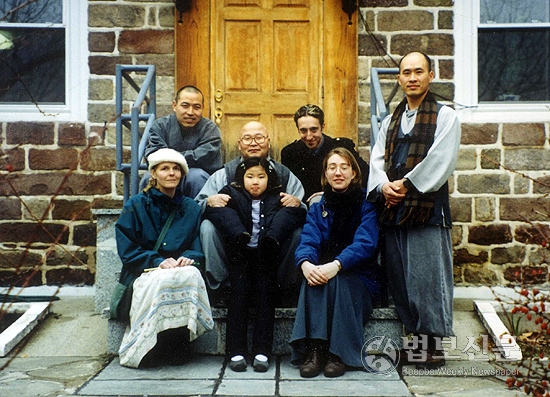
The abbot of the temple, Hwi-gwang Sunim, had a round face and wore thick glasses and a beret. At first, we students were formal with him, not even sure if we were allowed to touch him or not. Then he shook our hands, said that he thinks he looks like a mafia guy, and waggled his lips with his fingers to make a machine gun sound. We broke out laughing and relaxed. The other monks were shyer around us, and held back. For us, it was new to see monastics as temple staff, because we had the misconception that monks only meditated in far-away mountain monasteries and also because in Western centers, the leadership and teaching is almost always performed by lay people, both men and women.
That night, we students stayed in a nearby hotel while Ilmee Sunim slept at the temple. This was another surprise to us students, that monks and lay people stay separately. It makes sense, but we had never thought about it because, again, we thought monks lived only in monasteries. Some of the monks were young and good-looking, and I wondered about the dynamics among the members and these monks.
Early Sunday morning, after the monks performed their chanting, the abbot took us to a local diner for breakfast. It felt strange to be walking into an American diner with five monks in robes. But the waitress knew them so well, she didn’t even have to ask what they wanted: coffee and Western omelets. By the time we got back to the temple, the ladies from the night before were bustling around preparing huge plastic bowls of food. By 10:30, several buses from Manhattan delivered lay people, who flowed directly into the hall and began bowing. We students stood in the back, expecting that we would soon start meditation. But that is not what happened. Instead, we all began bowing and chanting. I was exhausted by the ninth bow but, more importantly, I was terribly concerned that my head would bump into the bottom of the lady bowing in front of me.
Even though I had grown up with bowing and chanting, that was just five percent of the time, with 95 percent spent in meditation. At this temple, we did only five minutes of meditation! I began to see that the books were right: This style of Buddhism is very different.
|






 > 언론보도자료